
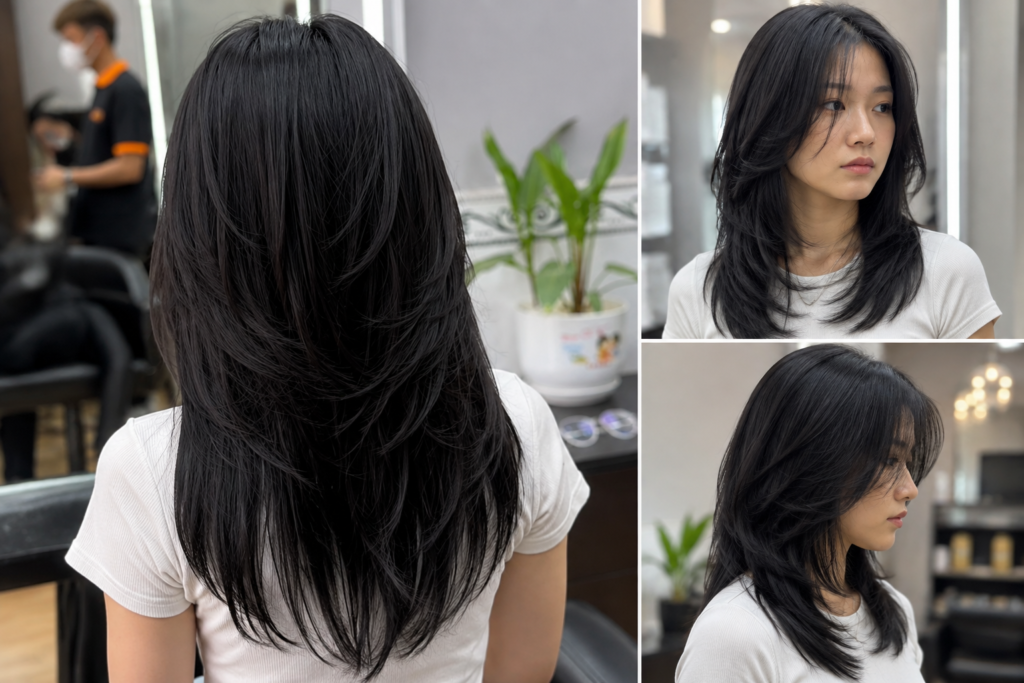
The short wolf cut has moved from niche trend to mainstream salon request in 2026, with hairstylists reporting rising demand for a cropped version of the shaggy, layered style. A short wolf cut combines heavy crown layering, face-framing pieces, and a tapered nape into a style that sits at the jaw or collarbone, offering more texture than a bob without the commitment of a full mullet.
What Makes It Different From a Regular Wolf Cut
The original wolf cut, a hybrid of the 1970s shag and 1980s mullet, typically falls past the shoulders. The short version keeps the same structural idea, choppy layers through the crown paired with a slightly longer back, but crops the overall length to somewhere between the jaw and collarbone.
Celebrity hairstylist Charlotte Mensah describes the cut as one that “balances attitude with softness,” blending the volume of a shag with the graduated shape of a mullet. That contrast between texture up top and length at the back is what separates it from a straightforward layered bob or pixie.
Hairstylist Larry King, founder of a well-known London salon group, says the shorter wolf cut is gaining traction quickly. He recently created versions of the cut for model Taylor Hill and musician Tigerlily Taylor, and points to Kristen Stewart as an early reference point for the look. He also cites Jacob Elordi’s grown-out mullet as an example of the more androgynous end of the short wolf cut spectrum.
Why Stylists Say It’s Catching On Now
Short hair has dominated the past two years, with 2025 largely shaped by fluffy and razored versions of the classic short chop. Hairstylist Linus Johansson sees the short wolf cut as a natural next step for people growing out a pixie, following a wave of “bixie” cuts, a hybrid of bob and pixie, in the prior year.
“It’s also a great haircut for those who want to try something a bit shorter, not quite as short as a mullet, but more texture than a bob,” Johansson says.
The style also benefits from steady celebrity visibility. Cara Delevingne and Billie Eilish have both worn longer, shaggier interpretations of the wolf cut, while Miley Cyrus and Jenna Ortega have popularized the shorter, more compact version that sits closer to the jaw. That range, from rocker-shag to cropped and feminine, is part of why stylists describe the cut as adaptable rather than a single fixed shape.
Grace Amelia, a stylist at Hershesons in London, says the cut suits people drawn to a more alternative style but notes it isn’t limited to one hair type. “It’s a haircut that actually works for everyone, whether you have fine and straight hair, or thick and curly,” she says.
How the Cut Is Built
A short wolf cut relies on internal layering rather than heavily stacked layers, keeping the shape close to the head instead of adding bulk. Key elements include:
- Crown volume: shorter internal layers cut to lift the top without teasing.
- Face-framing pieces: layers that hit around the cheekbone, considered the signature detail of any wolf cut.
- A tapered, slightly longer nape: length at the back that keeps the silhouette from reading as a straightforward pixie or bob.
- A wispy, non-blunt perimeter: ends that are point-cut or razored rather than cut straight across.
Adjusting the Cut for Hair Type
Stylists generally agree the short wolf cut needs to be customized rather than copied directly from a photo.
Fine or straight hair tends to show layers clearly, which can help define the shape, but poorly placed layers risk looking flat. Internal layering, rather than layers stacked on top of each other, helps avoid unwanted bulk while still building lift at the crown.
Wavy hair generally works with the cut’s undone character with minimal styling effort, since the existing texture reinforces the layered shape.
Curly and coily hair requires the most customization. Layers need to account for shrinkage and curl pattern, since a shape cut for straight hair often looks different once curls form. Cutting with attention to the natural curl pattern, rather than forcing a straight-hair template, helps the layers enhance rather than add bulk to the shape.
What to Ask For at the Salon
Because “wolf cut” now covers a wide range of shapes, from soft and nearly bob-like to sharply contrasted shag-mullet hybrids, specificity matters more than the name alone. Stylists recommend bringing two or three reference photos showing the front, side, and back, then discussing:
- How short the nape should be
- Where the shortest crown layers should start
- Whether to include bangs or face-framing pieces, and their length
- How much crown volume is wanted
- How much daily styling is realistic
Styling and Upkeep
The short wolf cut is designed to look intentionally undone rather than smoothed out. On wavy or curly hair, a lightweight mousse or curl cream applied to damp hair, followed by air-drying or diffusing on low heat, tends to work best. On straighter or finer hair, a texturizing spray or matte paste applied after the hair is dry helps create separation and lift without weighing the layers down.
Fashion coverage in Vogue highlights how modern short cuts prioritize low-maintenance texture over rigid coiffing. Because the crown carries most of the definition, the shape can lose its structure faster than longer cuts. Most versions need a trim roughly every six to eight weeks to keep the layers and face-framing pieces balanced, particularly for those wearing shorter bangs.
The Bottom Line
The short wolf cut isn’t a single haircut so much as a flexible framework: crown volume, face-framing layers, and a tapered nape that can be dialed up toward a dramatic shag-mullet hybrid or softened into something closer to a textured bob. Its growing salon demand in 2026 reflects a broader shift toward shorter, lower-maintenance styles that still read as deliberate, but getting a version that actually works depends on matching the layering to individual hair texture and density rather than requesting the trend by name alone.
This Wolf Cut Step-by-Step Technique Tutorial breaks down the precise layering and texturizing methods professional hairstylists use to build volume and shape in modern wolf cuts.
Related Reading: [Nordic Bob (Scandi Bob) Haircut Guide: Style & Tips]