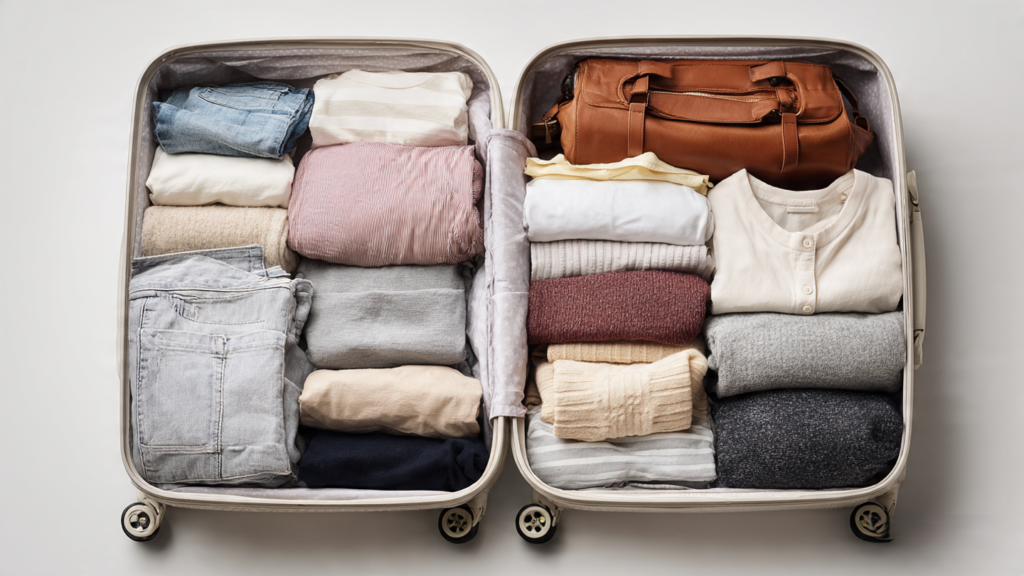
There is no single best way to pack a suitcase for every traveler. The right method depends on the clothing being packed, how much space is available, and how much wrinkling a traveler is willing to tolerate.
Rolling clothes saves the most space for casual items, bundle wrapping protects structured and delicate garments best, and packing cubes add organization rather than extra room. Compression cubes and vacuum bags shrink bulky items the most but come with tradeoffs in wrinkling and bag weight. Most experienced packers combine two or three methods rather than relying on one.
The 10 Packing Methods, Compared
1. Rolling (Ranger or Military Roll)
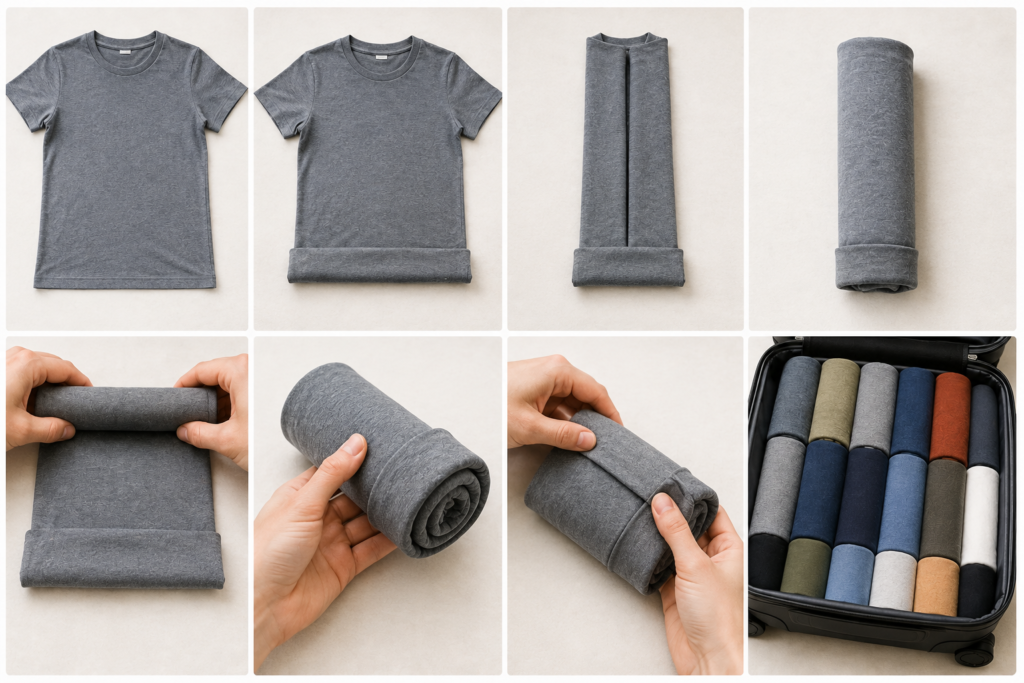
This technique folds the bottom hem of a garment outward to form a small pocket, rolls the item tightly from the top down toward that hem, then flips the pocket back over the finished cylinder to lock it in place. The lock keeps the roll from loosening even when the suitcase gets shaken, dropped, or handled roughly during transit. Travelers typically line these rolls side by side, standing on end, so every roll stays visible and none get buried under a stack.
Space Efficiency: High. Cuts packed volume by roughly a third compared with flat folding and fills gaps well between other items, including the curved corners of a suitcase.
Wrinkle Control: Moderate. Produces self-contained cylinders that resist unrolling, but can stretch or crease delicate fabric if rolled too tightly, especially fabrics with structure or stiffness.
Best Suited: T-shirts, jeans, underwear, socks, and other casual or synthetic pieces that tolerate tight folding without creasing.
Pros:
- Frees up more usable space than any flat-folding approach
- Rolls stand upright, making individual items easy to spot without unpacking the whole bag
- Locked-hem technique prevents rolls from unraveling in transit
- Works quickly once the technique is practiced
Cons:
- Not suited to blazers, suits, or anything with structure, since tight rolling stretches and creases stiff fabric
- Requires a bit of practice to get the lock-and-roll technique consistent
- Thin or slippery fabrics can still slip loose from the roll
2. Bundle Wrapping
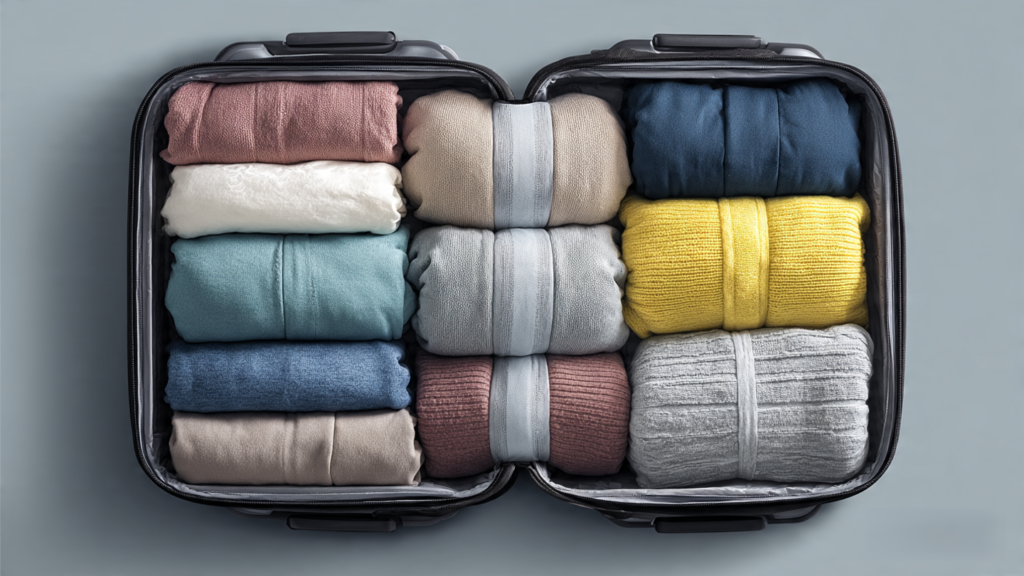
A soft core item, such as a toiletry bag or a stack of folded underwear, sits at the center of the suitcase. Garments are wrapped around that core in sequence, usually with the most wrinkle-prone or tailored pieces wrapped first so they sit closest to the padded center, and sturdier items layered around the outside. The entire bundle acts as one compact, cushioned unit rather than a stack of separate folded pieces.
Space Efficiency: Moderate. The packed bundle stays stable and fairly dense, but it does not compress as tightly as rolling or vacuum methods.
Wrinkle Control: Very high. Avoids the sharp fold lines that cause most visible creasing, producing the smoothest results of any method for structured and delicate clothing.
Best Suited: Suits, dress shirts, blazers, silk blouses, and dresses that need to arrive ready to wear without ironing.
Pros:
- Produces the least wrinkling of any method covered here
- The soft core cushions garments from shifting during transit
- Keeps a full outfit or set of formalwear compact as one stable unit
Cons:
- Takes noticeably longer to assemble than rolling or folding
- Reaching a single item usually means unwrapping the entire bundle, which is inconvenient for multi-stop trips
- Does not use suitcase space as efficiently as rolling or compression methods
3. Traditional Flat Folding
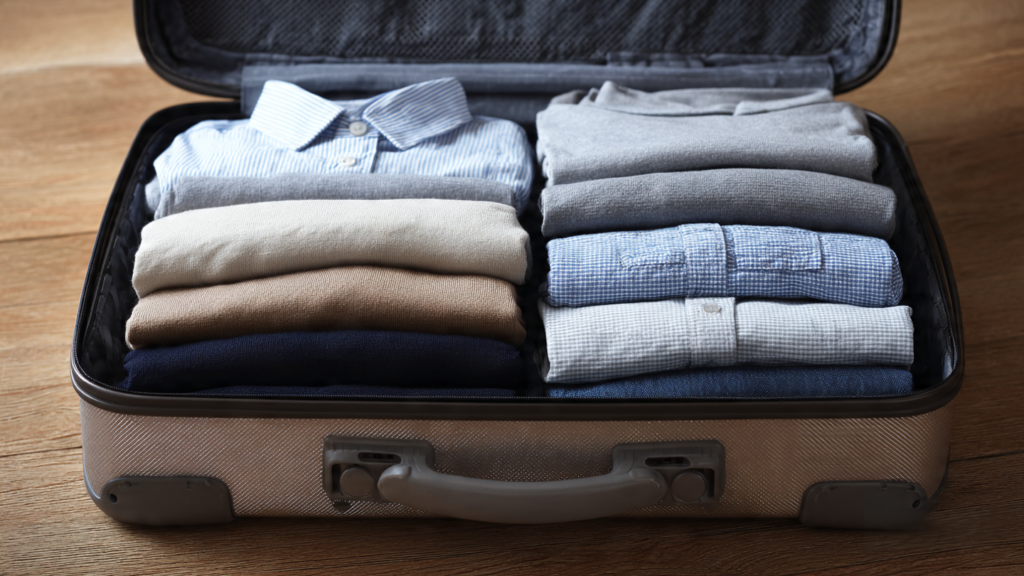
Garments are folded into flat rectangles, typically by buttoning shirts and folding at the shoulder and hem, then stacked in layers. Heavier items like shoes and denim usually go near the suitcase wheels for stability, with lighter, more wrinkle-prone pieces stacked on top where they will not get crushed.
Space Efficiency: Low. Uses more suitcase volume than rolling or compression methods since flat stacks leave more trapped air between layers.
Wrinkle Control: Moderate. Keeps structured garments neat at the moment of packing, but stacked layers can shift during transit and create fold-line creases, especially near the buttons and collar.
Best Suited: Structured basics, tailored shirts, and denim that hold their shape better folded flat than rolled or bundled.
Pros:
- Simple to execute with no learning curve or special technique required
- Keeps structured garments looking neat immediately after packing
- Easy to stack and organize by garment type
Cons:
- Wastes the most suitcase volume of any method on this list
- Stacks can shift in transit, deepening fold-line creases
- Less effective at filling irregular gaps around the suitcase edges
4. Packing Cubes
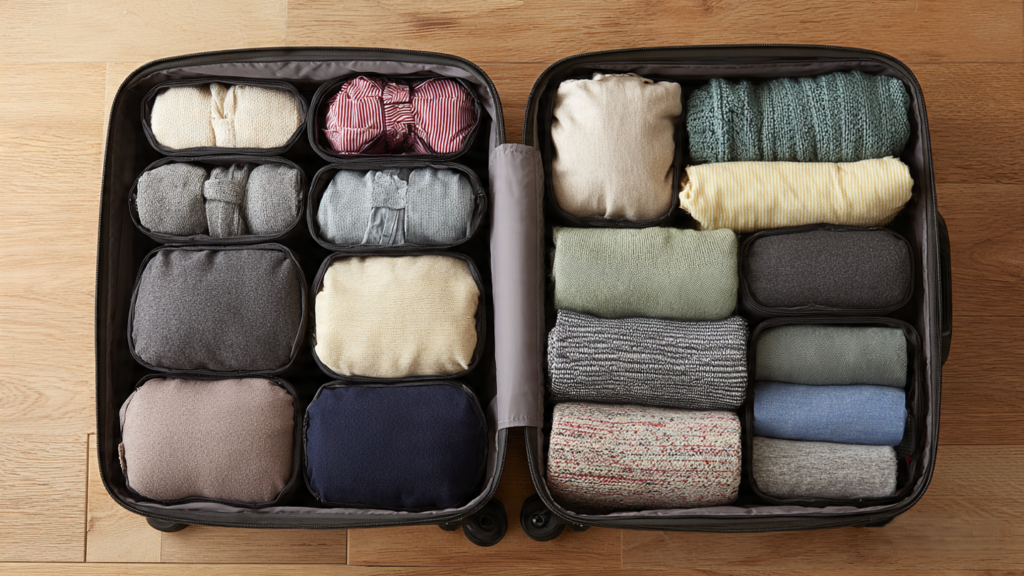
Clothes get sorted by category, such as tops, bottoms, and underwear, or by outfit, into zippered fabric cubes. Basic packing cubes do not compress their contents. Their main function is dividing the suitcase into organized, modular sections rather than reducing the total volume of clothing.
Space Efficiency: Neutral. Adds a small amount of bulk from the cube fabric itself and does not free up extra space compared with rolling clothes directly into the suitcase.
Wrinkle Control: Neutral. Keeps categories physically separated but does not actively reduce creasing on its own; wrinkle control still depends on whether items inside are rolled, folded, or bundled.
Best Suited: Organizing categories on shared luggage, family trips, or multi-stop itineraries where quick access to specific items matters more than raw space savings.
Pros:
- Speeds up both packing and unpacking significantly
- Keeps clean and dirty clothes, or different travelers’ items, clearly separated
- Makes it easy to locate a specific category without digging through the whole suitcase
Cons:
- Does not save extra space compared with rolling clothes loose
- Adds slight bulk and cost from the cube material
- Overfilling a cube can create uneven pressure on its zipper and seams
5. Compression Packing Cubes
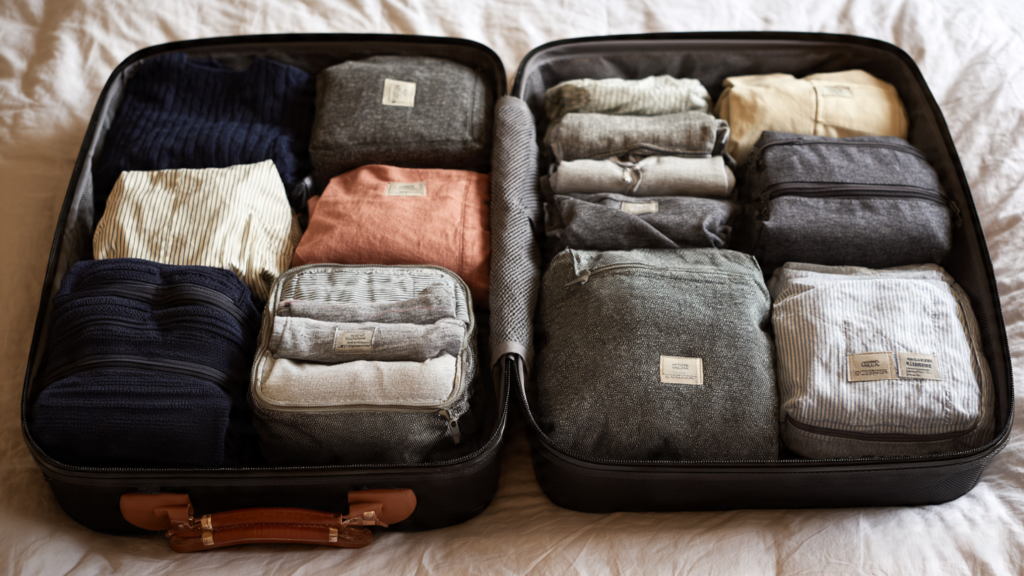
These cubes use a dual-zipper design. Travelers fill the main compartment to about 75 percent capacity, then close a second, outer perimeter zipper that squeezes out trapped air. This mechanical compression can reduce garment bulk by up to 40 percent compared with the same items packed loose.
Space Efficiency: High. Delivers a clear, measurable space gain for bulky items like sweaters and fleeces that take up a lot of loose volume.
Wrinkle Control: Moderate. Compression can wrinkle delicate fabric if the cube is overfilled, and uneven filling before zipping can create lumps that press unevenly into nearby items.
Best Suited: Bulky knits, fleeces, and other dense casual layers that need to shrink down for a carry-on or a multi-week trip.
Pros:
- Delivers the clearest measurable space savings for bulky casual items
- Keeps clothing organized by category while also compressing it
- Works well for travelers packing for cooler climates or longer trips in a single carry-on
Cons:
- Over-compression can deepen wrinkles on delicate fabric
- Costs more than basic packing cubes
- Filling the main compartment unevenly before zipping can create uncomfortable lumps against other items
6. Vacuum Compression Bags
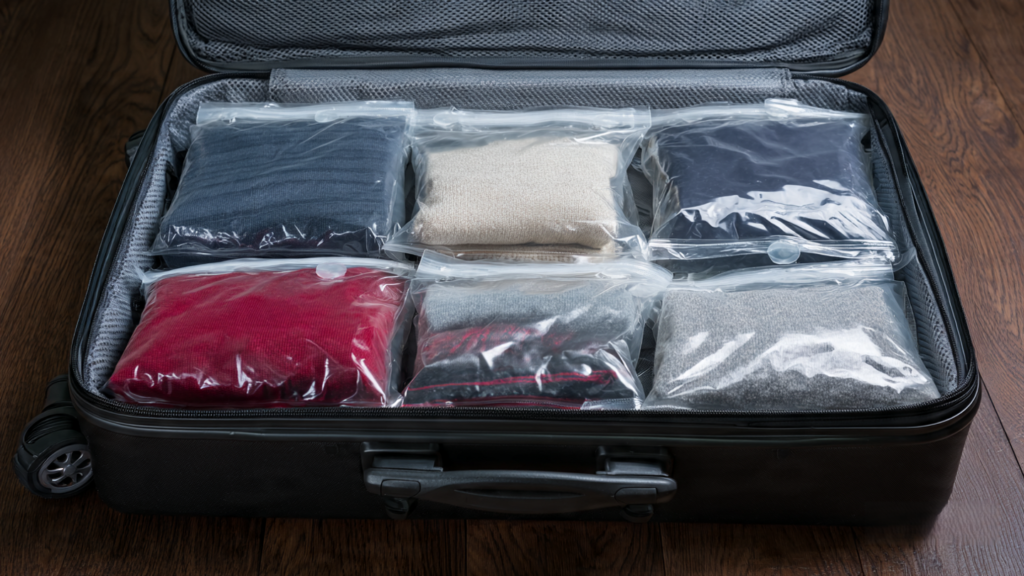
These bags remove air through either a manual roll-down valve or a portable suction pump, flattening bulky winter coats, sweaters, or bedding into dense, flat sheets. This is the most aggressive compression method available, designed for items that are bulky but not particularly delicate.
Space Efficiency: Very high. Provides the greatest possible space reduction of any method covered here, since nearly all trapped air gets removed.
Wrinkle Control: Low. Deeply creases woven fabric because of the intense pressure applied, and the plastic bag itself adds weight without reducing the actual weight of the clothing inside.
Best Suited: Heavy winter coats, bedding, and other bulky, non-delicate items where maximum space savings matters more than a wrinkle-free result.
Pros:
- Reduces bulk more dramatically than any other method
- Especially useful for winter travel or moving bulky soft goods like blankets
- Works with either a manual valve or a portable pump for convenience
Cons:
- Creates the deepest wrinkles of any method, unsuitable for dress clothes
- Adds bag weight without reducing the actual weight of the contents, which matters for checked-bag weight limits
- Requires carrying or buying a separate pump or valve system
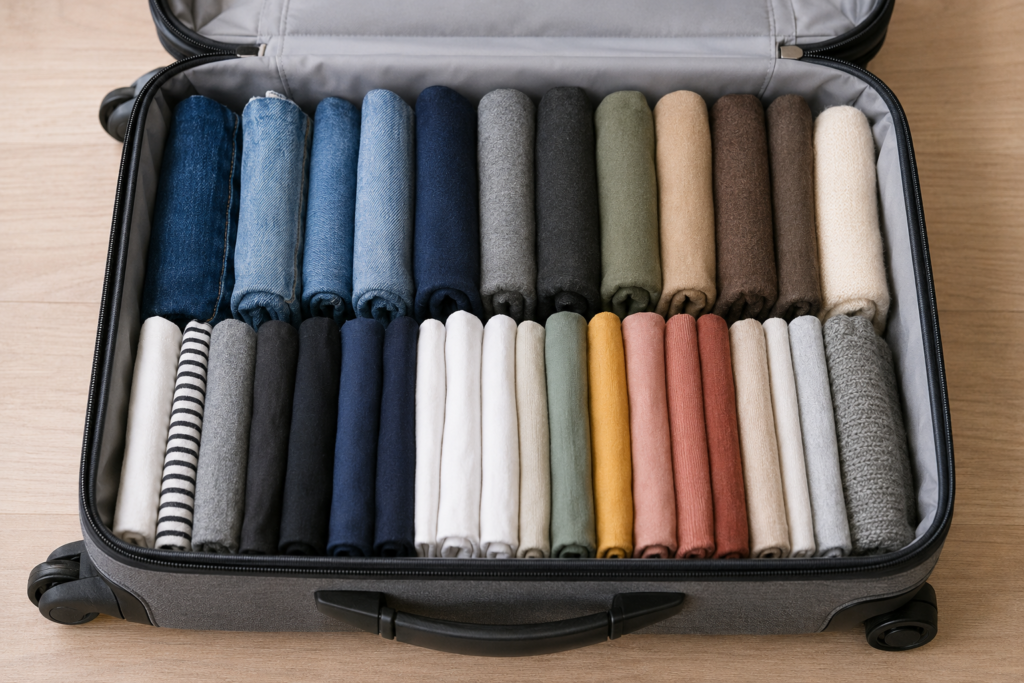
7. KonMari File Folding
Popularized by organizing consultant Marie Kondo, this method folds each garment into a small, compact rectangle that stands upright on its edge, the same way files stand in a drawer, rather than lying flat in a stack.
Space Efficiency: Moderate. Fills a cube or suitcase section efficiently since upright folds pack tightly side by side, but it is not as compact as compression methods.
Wrinkle Control: Moderate. Keeps folds neat and reduces the shifting that causes creases in flat stacks, but unstructured folds can collapse or slump if the section around them is not full.
Best Suited: Improving visibility inside packing cubes or suitcase sections, so every item stays visible at a glance without digging.
Pros:
- Every item stays visible without needing to unpack other layers
- Reduces the digging and searching common with flat stacks
- Pairs well with packing cubes for both organization and moderate space savings
Cons:
- Takes longer per item to fold correctly than rolling
- Folds can collapse if the surrounding section is not packed tightly enough to hold them upright
- Less effective in very deep, loosely packed compartments
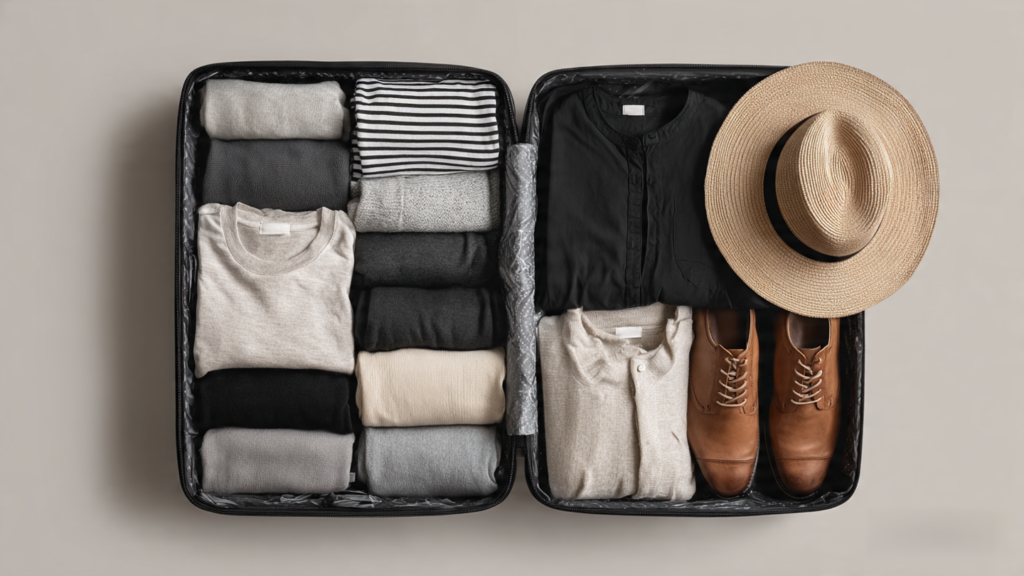
8. The 5-4-3-2-1 Capsule Rule
This is a selection method rather than a folding technique. It limits the total wardrobe brought on a trip to a fixed set of pieces, built around a numeric formula covering tops, bottoms, shoes, layering pieces, and accessories, generally sized for about a week of travel. The technique applies before any folding, rolling, or cube system even comes into play.
Space Efficiency: High. Reduces total packed volume by limiting the number of items brought, regardless of which folding technique gets applied afterward.
Wrinkle Control: Not applicable. This method governs what gets packed, not how individual garments are folded or protected from creasing.
Best Suited: Week-long carry-on trips where a traveler wants a versatile, mix-and-match wardrobe without checking a bag.
Pros:
- Prevents overpacking by setting a hard limit before packing begins
- Forces a coordinated, mix-and-match wardrobe that maximizes outfit combinations from fewer pieces
- Works especially well for carry-on-only travel, avoiding checked bag fees
Cons:
- Can feel restrictive on longer trips or trips spanning multiple climates
- Usually requires doing laundry partway through longer stays
- Requires careful advance planning to ensure all pieces coordinate
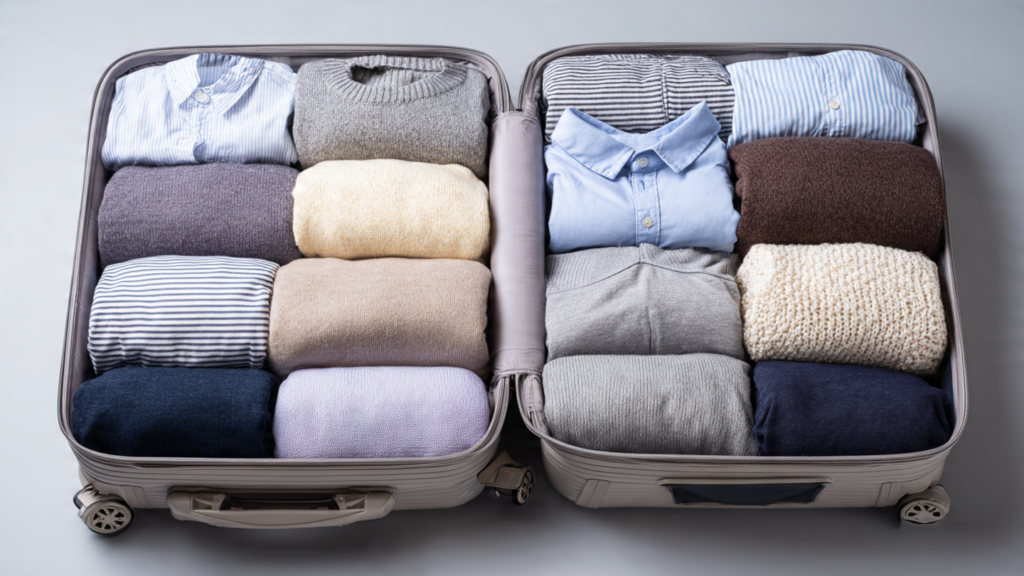
9. Outfit or Category Grouping
Travelers use one of two approaches here. The first, sometimes called an outfit sandwich, packs a complete daily outfit as one unit, tucking socks, underwear, and accessories inside folded pants or skirts. The second groups all items of the same type together, such as all tops in one cube and all bottoms in another, with a separate section reserved for dirty laundry.
Space Efficiency: Moderate. Outfit bundles can waste space when individual items vary significantly in size or thickness.
Wrinkle Control: Moderate. Depends heavily on whether the folding or rolling technique used inside each outfit or category group protects fabric from creasing.
Best Suited: Fast mornings, business trips, and family travel, where quick access to a complete outfit or a specific item type saves time.
Pros:
- Outfit grouping removes daily decision-making about what to wear
- Category grouping makes it fast to grab one specific item type without unpacking everything
- Keeps accessories organized alongside the clothing they pair with
Cons:
- Outfit bundles can waste space if garment sizes vary widely within one group
- Pure category grouping can require more searching to assemble a full coordinated look
- Harder to adapt an outfit bundle if weather or plans change unexpectedly
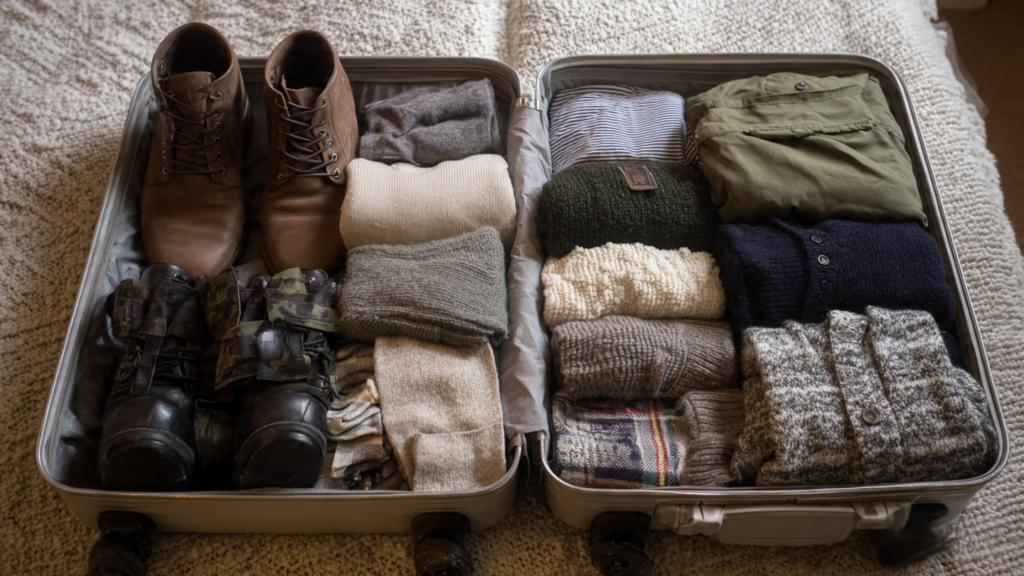
10. Strategic Layering and Footwear Nesting
Heavier items go near the suitcase wheels first for balance and stability. Shoes get stuffed with socks, chargers, belts, or other small items to use their otherwise wasted hollow cavities. Remaining gaps around the suitcase edges and corners get filled with soft rolled items last, after the heavier and bulkier pieces are already positioned.
Space Efficiency: High. Uses nearly every available inch of space, including hollow cavities inside shoes that most other methods leave empty.
Wrinkle Control: Not applicable. This method governs suitcase balance and gap-filling rather than how individual garments are folded.
Best Suited: Serving as a foundation layer underneath any other method, since it improves how the packed bag balances and rolls regardless of which folding technique is used above it.
Pros:
- Improves overall suitcase balance and stability when rolling or carrying it
- Uses hollow spaces inside shoes and around corners that other methods leave empty
- Works as a complementary base layer with any other technique on this list
Cons:
- Requires a thoughtful packing order, since items placed in the wrong sequence undo the benefit
- Heavy items can still shift if the suitcase is not packed tightly enough overall
- Takes extra time to stuff shoes and place items deliberately rather than dropping them in
Why No Single Method Wins
Every packing technique trades off space, wrinkle control, speed, or organization. Rolling is fast and compact but stresses stiff fabric. Folding protects structured garments but takes up more room. Compression tools free up the most space but can deepen creases. Matching a method to the fabric and trip length produces better results than forcing one technique on an entire suitcase.
Building a Combined Packing Strategy
Rather than choosing one method, the most consistent approach across packing guides layers several techniques by fabric type and suitcase zone. Heavy shoes and toiletries go near the wheels first. Shoes get stuffed with small items to use their hollow space. Casual, stretchable clothing gets rolled into the base layer around those heavier items. Structured and delicate pieces, such as blazers or dress pants, get bundle wrapped or folded and placed on top, where they are less likely to be crushed. Liquids should stay in a clear, quart-size bag placed in an easily accessible spot for security screening.
The Bottom Line
Rolling and compression tools free up the most usable space but carry the highest risk of wrinkling delicate or structured fabric. Bundle wrapping and careful folding protect those same fabrics but take longer and use more room. Packing cubes and KonMari folding add organization and visibility without meaningfully changing total space. The 5-4-3-2-1 rule and layering with footwear nesting work at a different level entirely, shaping what gets packed and how the whole bag balances, rather than how any single garment gets folded. The most reliable outcome comes from matching each technique to the fabric and trip length rather than committing to a single method for the entire suitcase.
Related Reading: [Bed & Mattress Sizes Guide: Dimensions, Types & Room Fit]