
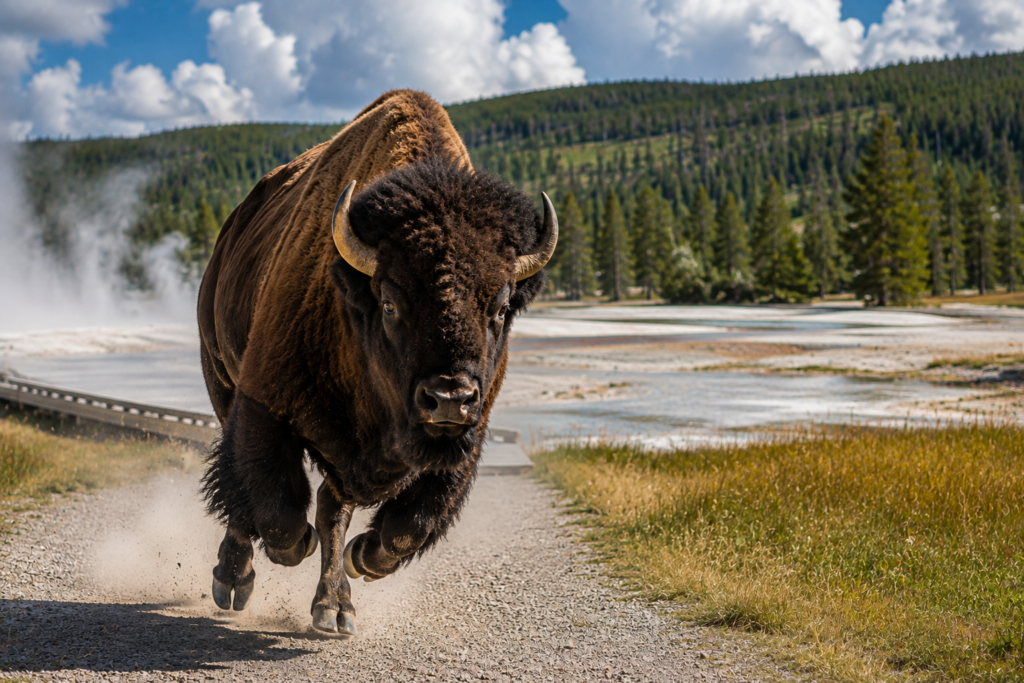
Yellowstone National Park has recorded three bison encounters with visitors in 2026, the most serious a July 10 attack that threw a 65-year-old grandfather eight feet into the air and broke his femur in multiple places. A 12-year-old was injured near Mud Volcano on June 26, and a child escaped unharmed after a bison gave chase along a boardwalk on July 28. Bison have injured more people in Yellowstone than any other animal in the park.
The pattern this summer has drawn renewed attention to the park’s 25-yard safety rule, which applies to bison and most other large wildlife. Officials say the animals are especially unpredictable right now because the annual mating season, known as the rut, is underway and runs through August.
Timeline of 2026 Encounters
| Date | Location | What happened | Result |
|---|---|---|---|
| June 26 | Near Mud Volcano, north of Fishing Bridge | A 12-year-old was injured by a bison | Treated and transported to a hospital; case remains under investigation |
| July 10 | Bridge Bay Campground, near Yellowstone Lake | A bull bison charged and tossed a 65-year-old man about eight feet into the air | Multiple fractures, including a broken femur; taken to a hospital in Bozeman, Montana, for surgery |
| July 28 | Boardwalk near a thermal area | A grazing bison briefly chased a child who ran past it | No injuries reported |
The Bridge Bay Campground Attack
The most severe incident happened around 8:30 p.m. on July 10, when Carl Isom-McDaniel, 65, was walking with his grandson through Bridge Bay Campground after dinner. A professional photographer nearby described the bull bison as agitated and charging at anything in its path before it turned on the pair.
The animal hooked McDaniel and threw him roughly eight feet into the air. Bystanders, including the photographer, helped drive the bison away from him after he landed. Park emergency staff transported him to Bozeman Health Deaconess Medical Center, where he underwent surgery for multiple broken bones.
Speaking from his hospital bed days later, McDaniel described the attack to the Associated Press, saying the bison had appeared calm before suddenly choosing him as a target and that it moved far faster than he expected. He said hitting the ground caused more damage than the toss itself, and that the animal could have gored him further while he was down but did not. He is expected to recover with physical therapy.
Yellowstone officials later confirmed they would take no management action against the bull, meaning it remains free in the park. This was the park’s second bison-related human injury of the year at the time it happened, following the June 26 case near Mud Volcano.
The July 28 Boardwalk Encounter
Weeks later, a bison grazing near a boardwalk chased after a child who ran past it while walking with a group. Video of the moment, shared by a visitor, spread widely online. No one was hurt, but the episode became the third documented human-bison incident of the year and reinforced warnings that even a calm-looking bison can react suddenly when people get close.
Why These Attacks Keep Happening
Bison often look slow and docile, which leads many visitors to underestimate them. In reality, adult bulls can weigh up to 2,000 pounds and run roughly three times faster than a human, covering the gap between “safe” and “too close” in seconds. Park officials describe the animals as unpredictable and quick to defend their space when they feel threatened.
The current mating season adds another layer of risk. During the rut, bulls compete for mates and can act more aggressively than usual, making the coming weeks through August a period when officials are urging extra caution.
Bison attacks are not new to Yellowstone, but they remain the park’s leading cause of visitor injury. Records show one bison-related injury in 2023, two in 2024, and two more the following year, including separate gorings near Old Faithful and Lake Village after visitors approached grazing animals too closely for photos. No one has died from a bison attack in the park since 1983, and officials say the park typically sees a couple of these incidents in an average year.
Warning Signs Before a Charge
Bison give visible cues before they charge. According to park guidance, these include:
- A raised tail
- Pawing at the ground
- Head bobbing or lowering while staring at a person
- Bellowing or snorting
Officials say these behaviors mean a person is already too close and that a charge could follow immediately.
Official Safety Rules
Yellowstone’s wildlife distance rules are not optional guidelines. It is illegal to knowingly approach or remain near an animal closely enough to disturb it. The National Park Service’s official safety guidance requires visitors to:
- Stay at least 25 yards away from bison, elk, deer, moose, bighorn sheep, and coyotes
- Stay at least 100 yards away from bears, wolves, and cougars
- Never approach, feed, or crowd any wildlife, even if it appears calm
- Move away immediately if an animal comes closer, rather than holding a position
- Stay inside the vehicle during a bison jam on park roads, and avoid honking or trying to pass
What to Do During a Charge
If a bison begins to charge, park guidance says not to stand still. Visitors should immediately walk or run away from the animal. If it keeps following, officials recommend using bear spray while continuing to retreat and taking cover behind a tree or a parked car. Anyone involved in a wildlife conflict is asked to report it to a ranger or call the park directly as soon as possible.
What Comes Next
With the rut continuing through August, park officials expect bull bison to stay active and easily provoked for the rest of the summer season. Following criticism over how quickly information reached the public after the July attacks, the park has since reinforced its standard safety messaging, though the underlying 25-yard rule has not changed.
For visitors planning trips before the season ends, officials’ core message has stayed consistent all summer: no bison in Yellowstone should be treated as safe to approach, no matter how calm it looks.
Related Reading: [Barracuda Fish: Facts, Habitat, Diet and Are They Dangerous?]