
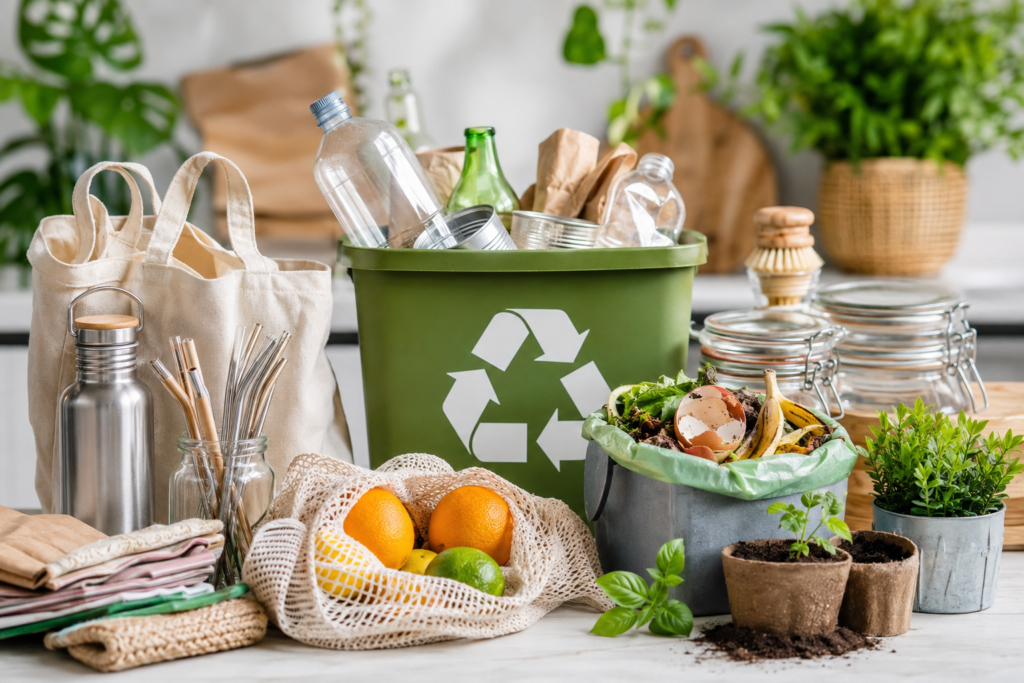
The most effective way to reduce waste at home is to prevent it before it starts: buy less, plan meals carefully, refuse single-use items, and reuse what you already own. Recycling and composting come after these steps, not before them.
According to data from the U.S. Environmental Protection Agency (EPA), Americans generate close to 4.5 to 4.9 pounds of municipal solid waste per person each day, according to EPA data cited across recent reporting. Food waste is one of the largest contributors. A U.S. family of four loses roughly $1,500 a year to uneaten food, according to USDA figures, and a 2026 analysis from ReFED found 70 million tons of surplus food in 2024, valued at $380 billion, with consumers spending an average of $762 per person on food that ultimately goes to waste. Globally, households account for about 60 percent of all food waste, or 79 kilograms per person each year, according to the UNEP Food Waste Index Report 2024.
These figures are not fixed. Official guidance from the EPA and USDA follows a clear order of priority: refuse and reduce first, then reuse and repair, and finally recycle or compost what remains.
Start With a Household Waste Audit
Before changing habits, spend one to two weeks tracking what goes into the trash and recycling bins. Sort items into broad categories: food scraps, packaging and single-use plastics, paper and mail, glass and metal containers, and broken or worn goods.
This audit reveals which categories dominate a specific household. A family that orders takeout frequently will have different priorities than one that cooks most meals at home. Once the biggest categories are identified, target one or two at a time rather than attempting a full overhaul at once. This incremental approach is more likely to produce lasting change.
Cutting Food Waste, the Biggest Opportunity
Food waste represents the single largest chance to cut household trash. Organic waste makes up more than 20 percent of municipal solid waste in landfills, and food decomposing in anaerobic landfill conditions releases methane, a potent greenhouse gas.
Practical steps supported across sources include:
- Check the refrigerator, freezer, and pantry before shopping, and build meals around what is already on hand
- Shop with a strict list to avoid impulse purchases that often go unused
- Store food properly: keep the refrigerator between 35°F and 38°F, place older items at the front, wrap leafy greens in a damp cloth, store herbs in water, and keep potatoes and onions in cool, dark places away from each other
- Understand the difference between “use by” and “best before” dates to avoid discarding safe food
- Freeze surplus bread, herbs, cooked grains, and leftovers before they spoil
- Repurpose leftovers into new meals such as soups or stir-fries
There are early signs these habits are having an effect. ReFED reported a 2.2 percent drop in total U.S. surplus food from 2023 to 2024, described as the first meaningful year-over-year reduction since the pandemic period, with changes in household shopping and meal planning contributing to the decline.
Setting Up Home Composting
Composting diverts food scraps from landfills, reduces methane generation, and produces material that can be used in home gardens. It works in both outdoor bins and small countertop systems, making it accessible even for renters without yard space.
| Compostable | Keep out of compost |
|---|---|
| Fruit and vegetable trimmings | Meat, bones, and fat |
| Coffee grounds and paper filters | Dairy products |
| Eggshells and nut shells | Synthetic materials and plastics |
| Plain paper napkins and cardboard | Chemically treated yard waste |
Countertop composters and dehydrators available in 2026 can reduce food waste volume significantly while producing compost-ready material, an option aimed largely at apartment dwellers who lack space for traditional outdoor bins.
Reducing Packaging and Single-Use Plastics
Packaging makes up a substantial share of residential trash. Replacing disposable items with durable, reusable alternatives breaks the pattern of continuous waste generation.
- Bring reusable shopping bags and produce bags, and skip plastic bags for loose fruits and vegetables
- Carry reusable water bottles and cups made of stainless steel or glass instead of buying bottled drinks
- Replace plastic wrap and disposable zip-top bags with silicone pouches, beeswax wraps, or glass containers
- Use washable cloths or cut-up old T-shirts instead of paper towels
- Buy staples such as rice, oats, spices, detergents, and soaps in bulk or refillable formats where available
- Group online orders and choose slower shipping when practical to reduce excess packing material
Starting with a single routine, such as a morning coffee order or a weekly grocery run, and building consistency there tends to work better than attempting every change simultaneously.
Non-Food Waste Around the House
Waste reduction extends beyond the kitchen into paper management, personal care, and general household habits.
Contacting direct mail registries and switching utility bills, bank statements, and insurance documents to digital delivery cuts paper waste at the source. Traditional bathroom products often come in rigid plastic containers that are rarely recycled effectively; refillable soap dispensers, solid shampoo bars, bamboo toothbrushes, and reusable cloths are increasingly available alternatives. Reusing medicine containers for travel toiletries and switching to biodegradable, phosphate-free cleaning products also reduces packaging and chemical waste.
For laundry, washing full loads in cold water and air-drying clothing when possible cuts both energy use and wear on fabric, extending how long clothing lasts before disposal.
Repair and Reuse Before Discarding
Before throwing an item away, consider whether it can be repaired or repurposed. Glass jars can become storage containers, old T-shirts can become cleaning rags, and clothing can often be mended rather than replaced.
Usable furniture, electronics, books, and household goods can go to local charities or community groups, while higher-value items can be sold through local marketplaces. Many communities host repair events or tool-lending libraries that reduce the need to buy replacements. When a new purchase is unavoidable, choosing durable, repairable products over disposable ones extends the useful life of household goods and delays disposal.
Recycling Correctly
Recycling is most effective after reduction and reuse efforts, and it only works when materials are sorted correctly. Non-recyclable items placed in the wrong bin, such as plastic bags, coat hangers, or broken crockery, can contaminate an entire batch of recyclables. Local acceptance rules vary by municipality, so checking guidelines before sorting matters.
New tools introduced in 2026 aim to reduce sorting errors. Smart bins using computer vision can identify items and direct users to the correct bin, while recycling apps can provide zip-code-specific rules given how much these vary between areas. A rollout of deposit return systems for beverage containers is also underway in 2026, with reported return rates between 85 and 95 percent in participating regions. Separately, countertop compactors that compress soft plastics like flimsy bags into denser blocks are being marketed as a way to make one of the least-recycled waste streams easier to process.
The Long-Term Payoff
Adopting these habits does not require eliminating trash overnight. Systematically changing buying habits, food management, and disposal practices allows households to shrink their environmental footprint gradually while also saving money on groceries and single-use purchases.
The combination of prevention, smarter shopping, reuse, and correct disposal produces far greater results than relying on recycling alone. Starting with a one-week waste audit, then choosing one or two high-impact habits to build on, offers a practical starting point for most households.
Related Reading: [Lifestyle – Trending Liberty]